BERLIN 17 February 2026 — Ambassador-Designate Maria Teresa T. Almojuela called on the German business community to deepen their trade and investment ties in Southeast Asia, especially in the green and digital sectors, as she outlined the Philippines’ economic priorities under its 2026 Chairship of the Association of Southeast Asian Nations (ASEAN).
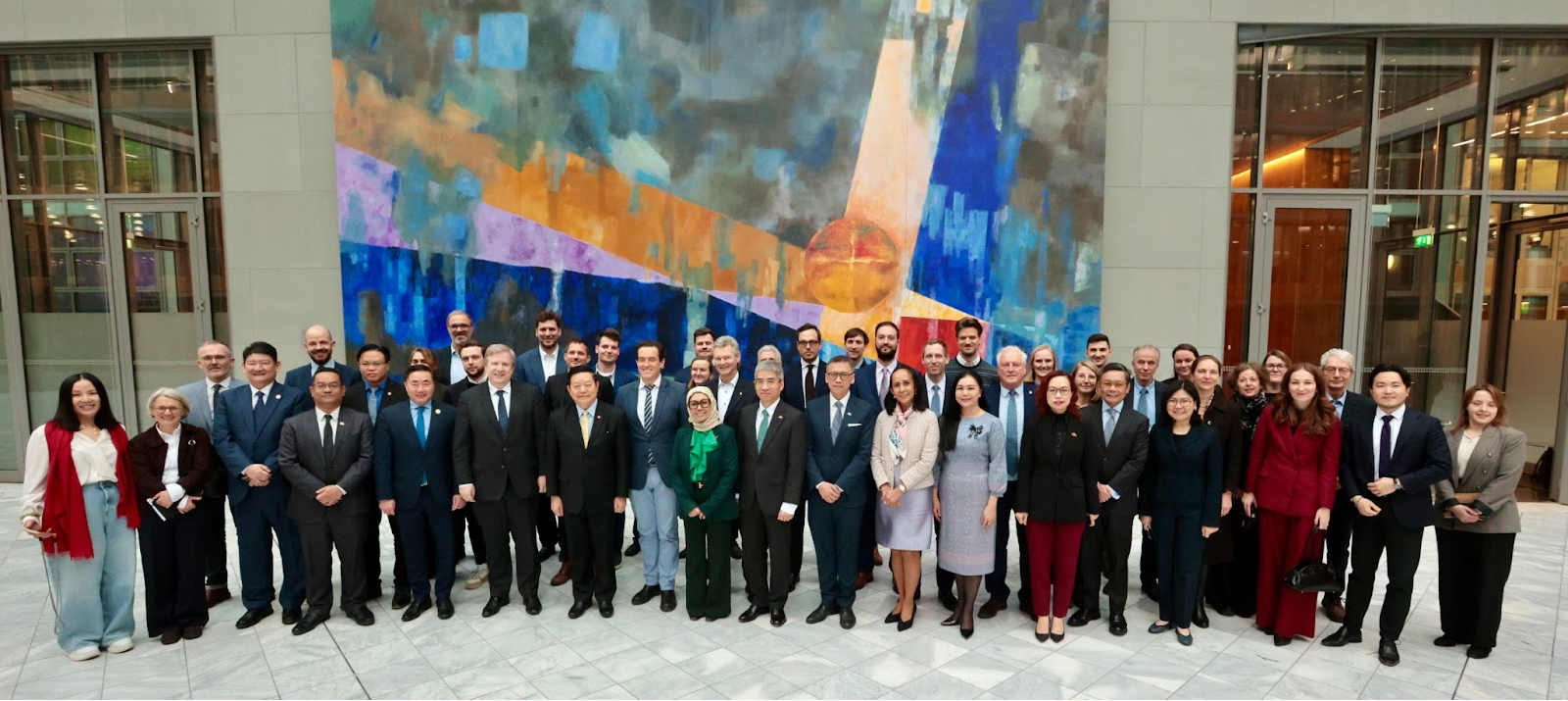
Participants of the Exclusive Business Round Table with Dr. Kao Kim Hourn, ASEAN Secretary General
(Photo courtesy of DIHK / Jens Schicke)
Ambassador-Designate Almojuela brought this message to the Exclusive Business Round Table with Dr. Kao Kim Hourn, ASEAN Secretary-General, organized by the Asia-Pacific Committee of German Business in coordination with the German Chamber of Commerce and Industry (DIHK) and the German Asia-Pacific Business Association, at the DIHK Headquarters in Berlin.
Ambassador-Designate Almojuela underscored the Philippines’ steadfast commitment to steer key decisions and outcomes to make the 680-million ASEAN economic community stronger, resilient, dynamic, future-friendly and inclusive. “The Philippines’ ASEAN Chairship is historic in that ASEAN now has 11 member states. 2026 also marks the year that ASEAN celebrates the 50th year of the Treaty of Amity and Cooperation (TAC). The Philippines is excited to expand ASEAN’s TAC partners to around 70 countries, from the current 58, by July 2026,” she added.
Ambassador-Designate Almojuela informed the meeting of the three pillars of Philippines’ Chairship, namely the Peace and Security Anchors, the Prosperity Corridors, and People Empowerment, and zeroed in on specific action points under the Prosperity Corridors, namely (1) strengthening trade and investment linkages; (2) accelerating digital transformation; (3) integrating ASEAN’s MSME development agenda; (4) leveraging creative economy and innovation; and (5) advancing sustainable and inclusive economies. She noted that some of these deliverables will drive synergies and integration, and to some extent, regulatory convergence that would be favorable to German investments in the region.
Dr. Kao spoke about the “ASEAN’s Evolving Role in a Changing World: Opportunities for ASEAN-Germany Economic Partnership,” which was timely as Germany’s Development Partnership with ASEAN marks its tenth anniversary this year. He likewise called for ASEAN and Germany to deepen their cooperation in advancing their digital transformation agenda, green transition and increased support for ASEAN’s evolving role as a global supply chain hub.
Among the German private sector members present in the roundtable were Siemens AG, and Wilo (Infrastructure); SiemensEnergy (Energy); Fresenius Medical Care, Braun (Health); the German Association of Automotive Industry or VDA (Automotive industry); and Start2 Group (Digitalization, startup and innovation). END


