The Philippine Embassy in Berlin

  • 
  • 
  • 
  • Home
  • The Embassy
    • About the Secretary of Foreign Affairs
    • The Embassy Team
    • Philippine-German Relations
    • Philippine Consulate General in Frankfurt
    • Philippine Consulates in Germany
    • Holidays
    • Job Opportunities
    • Bids and Awards Committee
      • Invitation to Bid
  • Consular Services
    • Online Appointments
      • Passport Applications
      • Other Consular Services
      • Walk-in Policy
    • Passports
      • New/Renewal (Adults)
      • New/Renewal (Minors)
      • Travel Documents
      • FAQs on Passports
    • Visas
      • Applying for a Visa
      • Visa Categories
      • Visa-Free Entry
      • Balikbayan Privilege
      • General Information on Entry of Foreigners
      • Foreign Surgical and Medical Mission (FSMM) to the Philippines
    • Civil Registry
      • Report of Birth
      • Report of Marriage
      • Report of Death
      • Shipment of Remains/Urns to the Philippines
      • Downloadable Forms
    • Authentication & Notarization
      • Affidavit of Support and Guarantee
      • Solemnization of Marriage
      • Legal Capacity to Contract Marriage (LCCM)
      • NBI Clearance
      • Unaccompanied Travel of Minor Children
        • Unaccompanied Travel of Foreign Children and Waiver of Exclusion Ground (WEG)
        • Unaccompanied Travel of Filipino Minor Children and DSWD Travel Clearance
      • Downloadable Forms
    • Citizenship (Renunciation, Reacquisition, Retention)
      • Reacquisition/Retention of Philippine Citizenship
      • Dual Citizenship
      • Renunciation of Philippine Citizenship
      • FAQs on Citizenship
    • Consular Fees
  • Other Services
    • Assistance-to-Nationals (ATN)
    • Overseas Voting
      • OV Registration for 2028 National Elections
      • Digital Voter’s ID
    • Labour
      • Employment Contracts
      • Overseas Employment Certificate (OEC)
    • Cultural
      • Filipino Community
        • Filipinos in Deutschland Registry (FinDEr)
        • Directory of Filipino Community Organizations in Germany
    • Trade and Importation
      • Bringing Currency into the Philippines
      • Importation of Regulated Products for Personal Use
      • Transport of Live Pets/Animals to the Philippines
      • Importation of Plants, Planting Materials, and Plant Products
      • Foreign Investment Act of 1991 (RA 7042, as amended by RA 11647)
  • Press Releases
  • Advisories
    • Embassy Advisories
    • MWO Advisories

Viewing category: Bilateral Agreements

PHL Delegation Observes Germany’s Dual Education System to integrate with K-12

October 20, 2015

GPCCI Study Visit-001

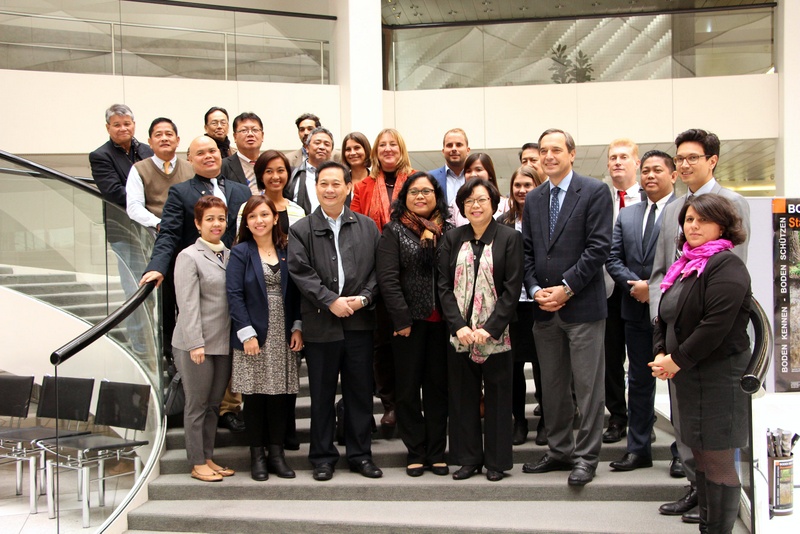
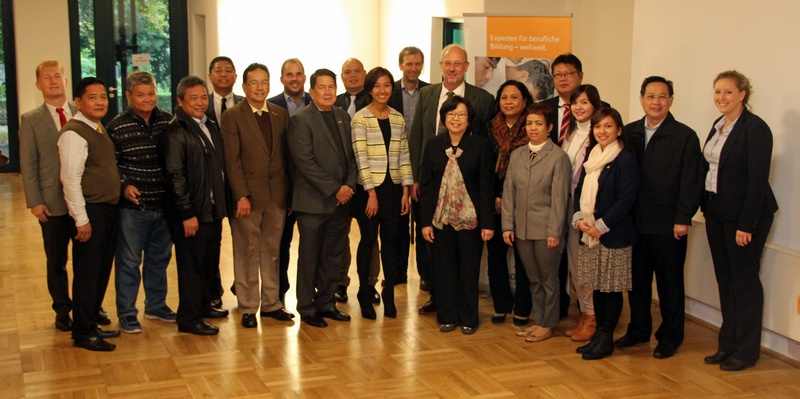
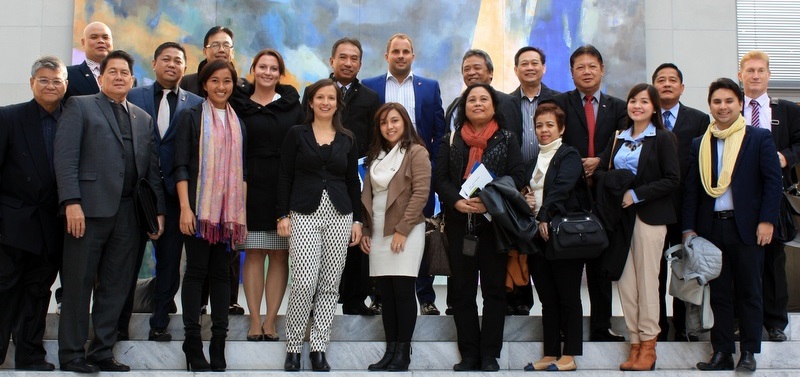
The delegation visited the Federal Institute for Vocational Education and Training in Bonn. Ambassador Melita Thomeczek with the Institute’s Deputy President Reinhold Weiß, (front, 4th from right) joined the group.


Berlin.  A twenty-person delegation from the Philippines recently crisscrossed Germany to get an in depth look at Germany’s dual education system and to learn which elements of the German model could be successfully incorporated into the Philippine setting. The group visited Frankfurt, Berlin, Bonn and Stuttgart from 12 to 16 October 2015.

Tobias Bolle, Project Director of Dual Training at the German-Philippine Chamber of Commerce and Industry (GPCCI), helped organize the Philippine delegation with representatives from the Department of Education, TESDA, Philippine Chamber of Commerce and Industry (PCCI) and its local chapters as well as private PHL companies such as TÜV Rheinland Philippines, BAG Electronics and CS Garments Inc.

The study tour was part of the Federal Ministry for Economic Cooperation and Development (BMZ) funded K-12 Plus Project, which is creating pilot models for the vocational education and training track at PHL senior high school levels.

Tobias emphasized that “strong cooperation among private companies, schools and chambers is essential in the dual training system in Germany; this is precisely what we want to recreate in the Philippines – through the K-12 Project. The site visits enabled the delegates to learn more and to get a deeper understanding of how this system works and how it can be translated and implemented in their country through their respective institutions.”
GPCCI Study Visit

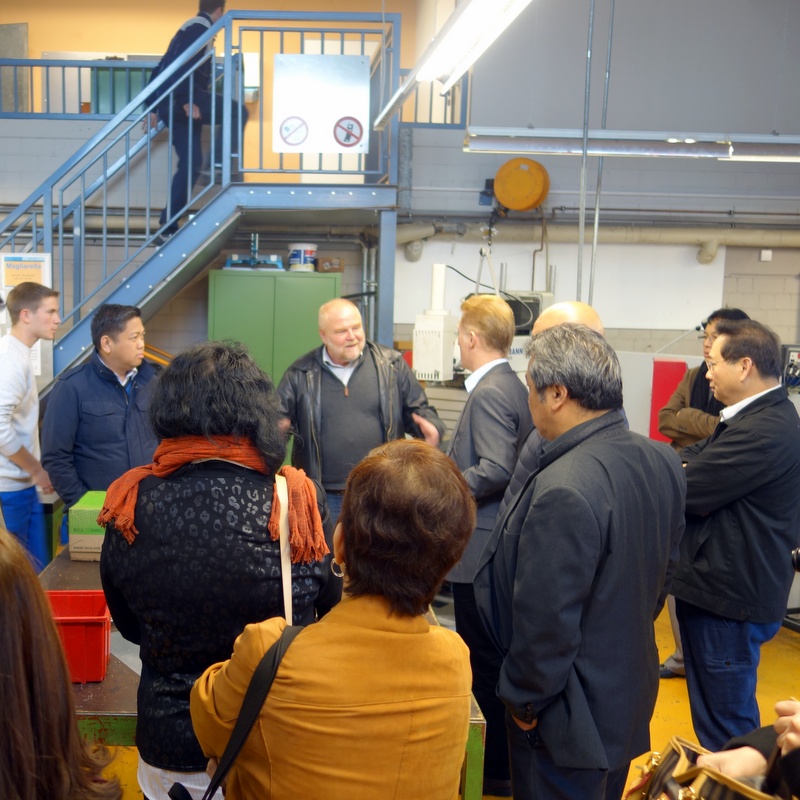
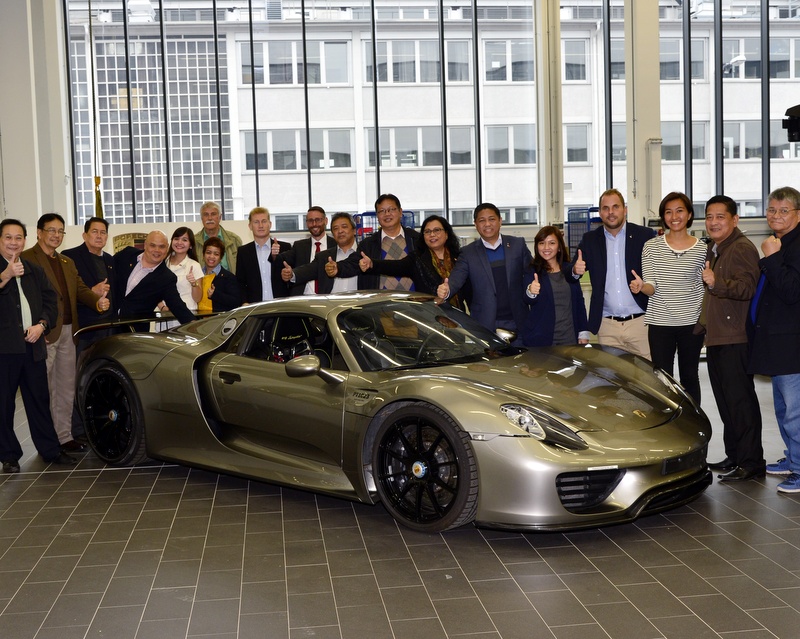
The study tour included visits  to the Chamber of Commerce Headquarters (DIHK) and Chambers of Crafts (ZDH, HWK),  Don Bosco Mondo and the Federal Institute for Vocational Training and Education (BIBB) and Porsche.
GPCCI Study Visit-010

Ambassador Melita Sta. Maria-Thomeczek, who welcomed and joined the delegation in Bonn, was glad that the major PHL stakeholders of the program: the PCCI, DepEd, and TESDA were represented in the study tour. She emphasized that it was important for all three, especially the business sector, to make the system work and to take advantage of the support of Germany on the matter. “It will be an all-win situation for all and a major goal will be met : we would have a skilled and marketable workforce and we can find the right job-fit for our youth.”

She noted that German companies operating in the Philippines have been role models of the dual-tech training system. She hoped that these companies “will continue to strongly demonstrate the system on local industry in the Philippines.  German companies like Continental Temic, BAG Electronics, and CS Garments are proving that significantly investing in on-the-job-training and apprenticeships for highschool students will benefit companies. You will have students who will develop an aptitude for a work sector and thereafter be more productive, ambitious, and loyal to companies.”
GPCCI Study Visit-012

In particular, Philippine delegates gained insights on the partnership between Don Bosco, Porsche AG, and PGA Cars which are jointly running the Porsche Training and Recruitment Center Asia (PTRCA) in Manila.  The PTRCA trains mechatronics specialists for deployment to Porsche Service Centers in Asia, Latin America and the Middle East.  An expanded PTRCA program is expected to be launched later this year.
GPCCI Study Visit-002

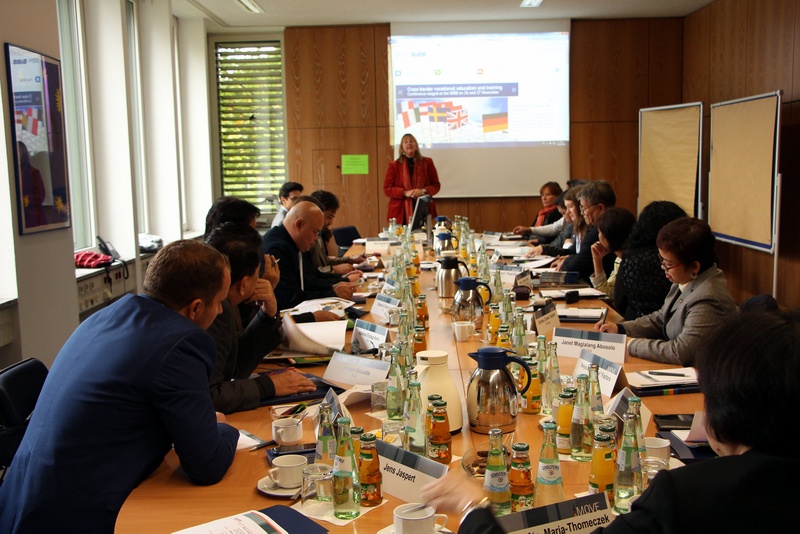
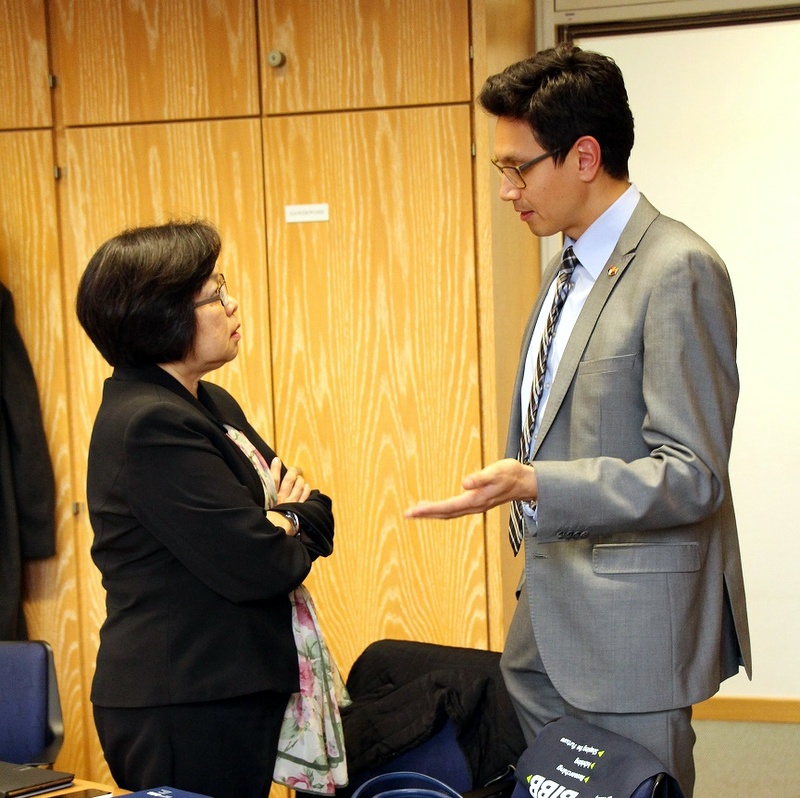
As part of the study tour, an iMOVE Roundtable on the Philippines was also held in Bonn on 14 October 2015 to explore how the German training sector could forge partnerships with their Philippine counterparts.  The dual-tech system consist of both classroom study and hands-on practical experience at the workplace.  The delegation agreed that Philippine partners needed to find solutions that will allow trainees greater time in the work place as well as access to relevant technology in their fields of expertise.  IMOVE is part of the Federal Institute for Vocational Education and Training (BIBB) and is an initiative financed by the German Federal Ministry for Education and Research (BMBF) to promote German training providers to international partners.
GPCCI Study Visit-004

Hans-Gerhard Reh from iMOVE, who had just returned from a visit to the Philippines earlier in the month, observed that “during the Philippines visit of Secretary of State Brigitte Zypries we met representatives of various German-Philippine companies. All participants and hosts agreed that training young people according to industry demands was necessary for the dynamic and sustainable economic development of the Philippines.  The iMOVE Round-Table Philippines was a great opportunity to discuss recent developments in the field of Vocational Education Training.” END
K-12 pic3

PH and Germany Strenghten Ties in 2nd Political Consultations in Berlin

June 17, 2015

The Philippines and Germany agreed to strengthen existing ties and pursue further avenues for cooperation in trade, development cooperation, climate change, and renewable energy on Tuesday, 16 June in Berlin, Germany in their second bilateral political consultations.

politcal consultations-003

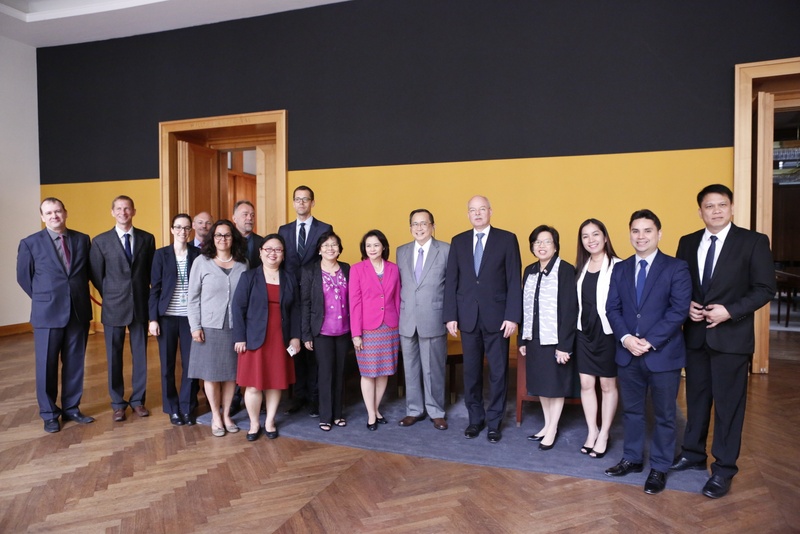
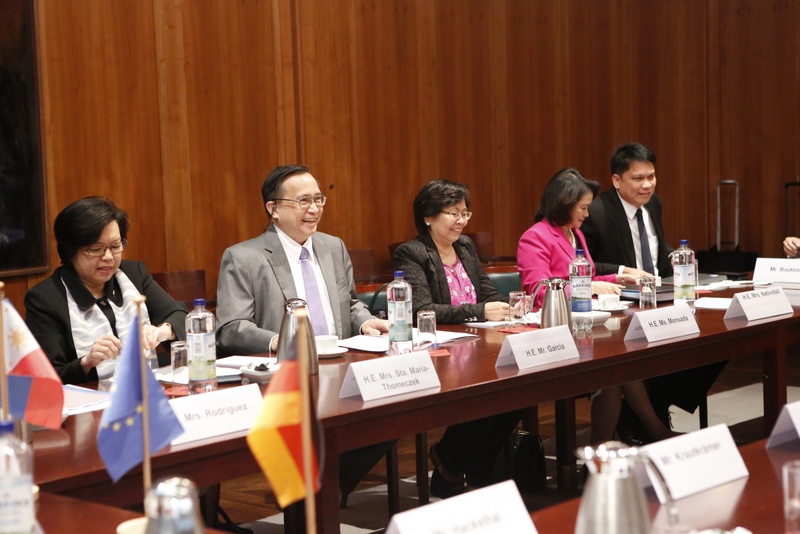
Undersecretary for Policy at the Department of Foreign Affairs Evan P. Garcia led the Philippine delegation, which consisted of representatives from coordinate Philippine agencies, while Ambassador Clemens von Goetze, Director General for  Africa, Asia, Latin America, Near and Middle East Office  of the German Foreign Ministry led the German side.

 politcal consultations-001
politcal consultations-004

There was a substantive exchange of views on bilateral, regional and global concerns. The discussion also focused on how to further strengthen ties in trade and investments,  directions to improve labor cooperation by streamlining the implementation of the Triple Win Project ( Filipino nurses for German hospitals) , furthering development cooperation through the promotion of dual technical-vocational education and training (TVET) in the Philippines, and pursuit of programs to respond to climate change/ environment issues.

politcal consultations

Prospects for cooperation in the areas of energy, fisheries and agriculture to help poverty reduction were also discussed.  Elevating bilateral trade from its current modest level of USD 5.3 billion was given special emphasis by the two sides. The consultations also formally announced the forthcoming German Asia-Pacific Business Association business mission to the Philippines in October to be led by Parliamentary State Secretary Brigitte Zypries of the Ministry of Economics and Energy. Focus of the mission will be the energy sector.

politcal consultations-002

The meeting also touched on the Philippines’ priorities for the ASEAN Integration and the progress of select political and economic developments, such as the Bangsamoro and the 2016 elections.

The inaugural Philippines-Germany political consultations took place on 17 October 2013 in Manila which led to the successful celebration of the 60th anniversary of the establishment of PH-Germany bilateral diplomatic relations in October 2014. The second meeting this 16th of June followed a series of high-level exchanges between officials of both countries, most prominent of which was the President’s visit to Berlin in September 2014.

Germany is the Philippines’ biggest European trade partner and among the country’s biggest ODA partners. The meeting this year coincided with Germany’s presidency of the G7, which climaxed in the recent Leaders’ Summit from 7 to 8 June 2015.

Federal Institute for Vocational Education and Training (BIBB) Affirms Commitment to Strengthen Dual Education in the Philippines

March 19, 2015

Berlin.  During a recent visit to Bonn, Ambassador Melita Sta. Maria-Thomeczek had the opportunity to call on BIBB Deputy President Prof. Dr. Michael Weiss and senior management at the Federal Institute for Vocational Education and Training (BIBB or Bundesinstitut für Berufsbildung).

BIBB TVET

Ambassador Thomeczek (2nd from right) calls on BIBB Deputy President Prof. Dr. Michael Weiss (far right).


Both sides noted that following the visit of President Aquino to Germany in September 2014, institutional and technical cooperation has developed at a fast pace.  The BIBB is acting as the focal point for Germany under the Joint Declaration of Intent in the Field of Technical and Vocational Education and Training (TVET).

BIBB experts were recently in Manila in January for a one week mission to support Germany’s ongoing “Pilot Program in the Area of Dual(ized) vocational education and training in the context of the K-12 Reform in the Philippines (K-12 Plus).”  The program involves multiple government and private sector stakeholders, including the Department of Education (DepEd), Technical Education and Skills Development Authority (TESDA), Department of Labor and Employment (DOLE), German-Philippine Chamber of Commerce and Industry (GPCCI), Philippine Chamber of Commerce and Industry (PCCI), Cebu Chamber of Commerce and Industry (CCCI), Philippine Business for Education (PBEd) Foundation, AFOS Foundation, People Credit and Finance Corporation (PCFC), and pilot schools.

BIBB is expected to utilize its cost-benefit models to also measure the effectiveness of dual vocational training.  Ambassador Thomeczek emphasized that “the BIBB’s cost-benefit study, which is expected to be completed by the end of the year, would be an important tool for policymakers and companies to assess the investment costs required to train employees.  More importantly, it should provide us with a clear assessment of the monetary and non-monetary benefits in the upskilling of employees.  Such a detailed assessment should help convince Filipino companies to buy-in into the model of in-company training that is so prevalent in Germany.”

***END

More Filipino dual citizens in Germany starting 2015

December 22, 2014

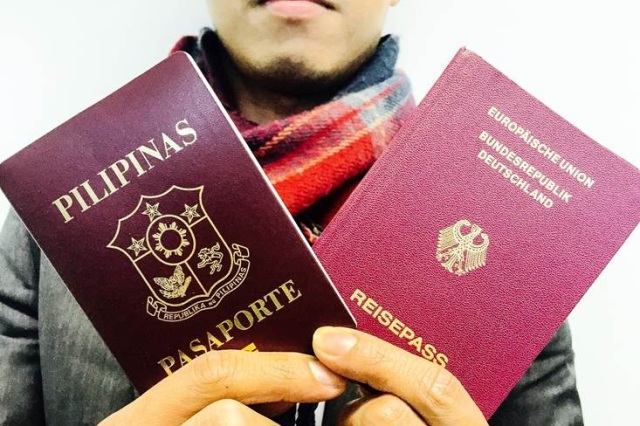
Effective 20 December 2014, children born in Germany after 01 January 2000 to parents who, upon said birth, 1) were both foreigners and 2) one parent has stayed in Germany legally for 8 years, and 3) the child has grown up in Germany, can now opt for both German citizenship and the citizenship of their parent’s country when they turn twenty one (21).  Previously, children born to foreign parents had to face the difficult decision of choosing only one citizenship upon reaching twenty one (21).  For many who were born of Filipino parents, this meant choosing German citizenship over Filipino citizenship.


filipino-german-passport

The amended German citizenship law (German Nationality Act or StAG) has now abolished the exclusivity rule that obliged children born in Germany of foreigner parents to choose one citizenship over the other citizenship (Optionspflicht).  Children born of foreigner (non-German) parents in Germany after 01 January 2000 can now have  both citizenships.  However there is a condition that they should have grown up in Germany. This means they have been in Germany for eight (8) years or attended a school in Germany for six (6) years, or graduated from school or occupational training in Germany.

The same exemption from the obligation to choose is applicable to those children of foreign parents who were born in Germany between 01 January 1990 and 31 December 1999 and were naturalized, becoming German citizens in the year 2000.  For them, they are likewise no longer obliged to choose one from both citizenships and can therefore retain their dual citizenships provided they grew up in Germany.

The changes to the citizenship law will not affect the current rule in the Philippines that children born of mixed marriages (ex. Filipino-German) are entitled to both citizenships (dual citizenship by reason of blood).

Thus, aside from the usual dual Filipino-German citizens, born of mixed Filipino and German parents and who are therefore both Filipinos and German by birth, there is now a newer group of dual Filipino-German citizens. They are those born of Filipino parents, or of a Filipino parent and a non-German parent.

Ambassador Melita Sta. Maria-Thomeczek applauded the recent amendments to the German law.  Ambassador Thomeczek stated that “the changes to the immigration law are important in ensuring that Germany continues to be an open and multicultural society.  It is especially important that Fil-Ger youth, many of whom continue to closely identify themselves with the Philippines, are able to stake their claim to their parent’s homeland.  No difficult decisions will have to be made – the only decision they will have to think about it is when to renew their Philippine passport!”

***END

« Previous Page
Next Page »

ARCHIVES

CONNECT WITH US

  • 
  • 
  • 
  • 

CONTACT US

Luisenstrasse 16, 10117 Berlin
Phone: +49 (0) 30 864 95 00
info@philippine-embassy.de
(General Inquiries only)
For Consular-related Queries please send directly to the respective email addresses below
)

Assistance to Nationals (ATN) / Emergency Hotline: +49 (0) 173 421 7750
(Please help us keep the line free for those with real emergencies. Do not call this number for regular inquiries.)

Consular Hotline: +49 (0) 173 521 5703 (For queries on Consular Services)

Email Addresses:

Passport
(passport@philippine-embassy.de);

Authentication, Notarial, and Legalization
(authentication@philippine-embassy.de);

Visa
(visa@philippine-embassy.de);

Civil Registry
(civilregistry@philippine-embassy.de);

Citizenship
(Renunciation; Re-acquisition/Retention) (citizenship@philippine-embassy.de);

Other Consular queries
(consular@philippine-embassy.de)

Opening Hours
Consular Section
Mon – Fri – Fri 09:00H – 16:00H
(Except on Philippine and German holidays)


Philippine Migrant Workers Office (MWO)

For OEC and Verification of Employment Contracts of Balik-Manggagawa in Germany, Belgium, Luxembourg, The Netherlands, and Russia:

Mobile: +49 17681317465 (WhatsApp);
email: mwo.germanyoec@gmail.com

For accreditation of Agency and Direct Hires in Germany, Belgium, Luxembourg, The Netherlands, and Russia:

Mobile: +49 15229021623 (WhatsApp/Viber)
email: germany@mwoberlin.com

For OWWA membership, welfare, and labor case assistance:

Mobile: +49 152 2823 8085 (WhatsApp)
email: owwamemb@gmail.com; mwo_berlin@dmw.gov.ph

Recent Stories

  • Notice of Resident Election Registration Board (RERB) Hearing, 20 April 2026
  • ADVISORY: Embassy Closure for Easter
  • Philippine United Nations Security Council (UNSC) Bid for 2027-2028
  • Philippine Embassy Consular Outreach Mission in Hamburg, 25-26 April 2026
  • UPLIFT Series: Babaylan Unfiltered – Celebrating Filipina Leadership in Berlin
Copyright © 2026