The Philippine Embassy in Berlin

  • 
  • 
  • 
  • Home
  • The Embassy
    • About the Secretary of Foreign Affairs
    • The Embassy Team
    • Philippine-German Relations
    • Philippine Consulate General in Frankfurt
    • Philippine Consulates in Germany
    • Holidays
    • Job Opportunities
    • Bids and Awards Committee
      • Invitation to Bid
  • Consular Services
    • Online Appointments
      • Passport Applications
      • Other Consular Services
      • Walk-in Policy
    • Passports
      • New/Renewal (Adults)
      • New/Renewal (Minors)
      • Travel Documents
      • FAQs on Passports
    • Visas
      • Applying for a Visa
      • Visa Categories
      • Visa-Free Entry
      • Balikbayan Privilege
      • General Information on Entry of Foreigners
      • Foreign Surgical and Medical Mission (FSMM) to the Philippines
    • Civil Registry
      • Report of Birth
      • Report of Marriage
      • Report of Death
      • Shipment of Remains/Urns to the Philippines
      • Downloadable Forms
    • Authentication & Notarization
      • Affidavit of Support and Guarantee
      • Solemnization of Marriage
      • Legal Capacity to Contract Marriage (LCCM)
      • NBI Clearance
      • Unaccompanied Travel of Minor Children
        • Unaccompanied Travel of Foreign Children and Waiver of Exclusion Ground (WEG)
        • Unaccompanied Travel of Filipino Minor Children and DSWD Travel Clearance
      • Downloadable Forms
    • Citizenship (Renunciation, Reacquisition, Retention)
      • Reacquisition/Retention of Philippine Citizenship
      • Dual Citizenship
      • Renunciation of Philippine Citizenship
      • FAQs on Citizenship
    • Consular Fees
  • Other Services
    • Assistance-to-Nationals (ATN)
    • Overseas Voting
      • RERB Hearing
      • OV Registration for 2028 National Elections
      • Digital Voter’s ID
    • Labour
      • Employment Contracts
      • Overseas Employment Certificate (OEC)
    • Cultural
      • Filipino Community
        • Filipinos in Deutschland Registry (FinDEr)
        • Directory of Filipino Community Organizations in Germany
    • Trade and Importation
      • Bringing Currency into the Philippines
      • Importation of Regulated Products for Personal Use
      • Transport of Live Pets/Animals to the Philippines
      • Importation of Plants, Planting Materials, and Plant Products
      • Foreign Investment Act of 1991 (RA 7042, as amended by RA 11647)
  • Press Releases
  • Advisories
    • Embassy Advisories
    • MWO Advisories

Viewing category: Culture

The Berlinale Talent Campus: Philippine Film Industry Expands its Profile at the 65th Berlin International Film Festival

February 13, 2015

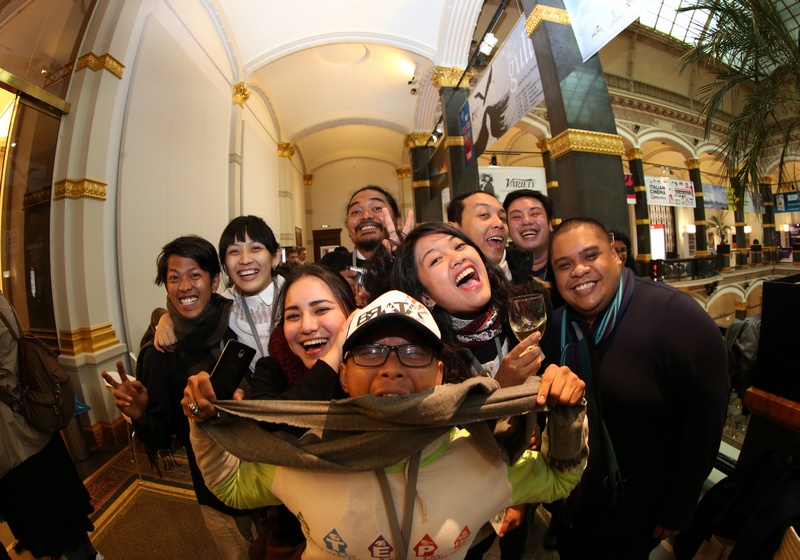
Berlin. The Philippines was strongly represented at this year’s Berlin International Film Festival (Berlinale), which took place from 5 – 15 February 2015 through the festival’s Talent Campus.
2-filipinos Berlinale Talent Campus-001

The Campus brings together annually (through the Festival) selected groups of international filmmakers: directors, screenwriters, producers, cinematographers, editors, actors, distributors, production designers, sound designers/ composers and film critics from all over the world are invited.  It is an initiative of the Berlin International Film Festival, which is  funded by the Federal Government Commissioner for Culture and Media, in cooperation with Creative Europe MEDIA, a program of the European Union, the Robert Bosch Stiftung, the Medienboard Berlin-Brandenburg, Canon, Federal Foreign Office and the German Film Fund.
Out of 2,529 aspirants from 117 countries for the Talent Campus, 300 promising filmmakers were chosen to participate in the thirteenth edition of the program with the theme, “2015:  A Space Discovery”.

Nine (9) Filipino filmmakers made it to this year’s Berlinale Talent Campus.

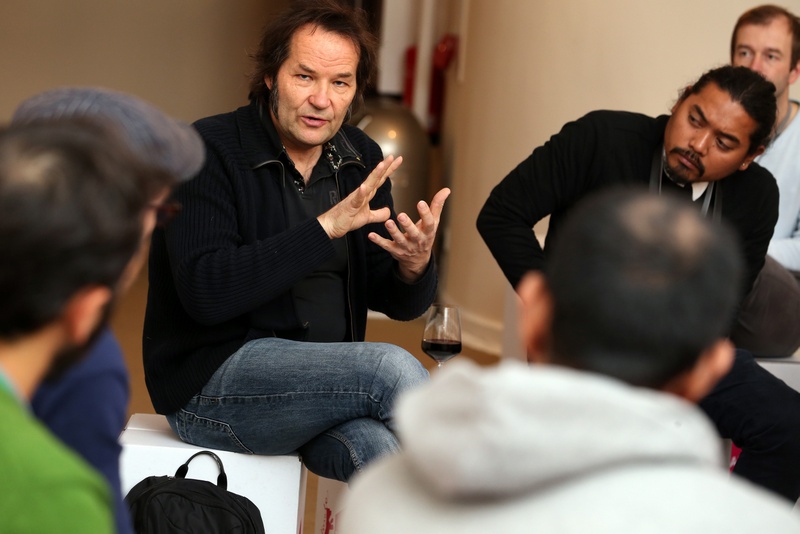
They were cinematographer and director Dan Villegas, screenwriter and director Giancarlo Lauro Abrahan, sound designer and editor Warren Santiago, actor Sandino Martin, director Sigrid Andrea Bernardo, editor and director Charlie Gohetia, producer and director Joseph Israel Laban, director Hannah Espia, and director Rina Tsou.  Participants not only got to pitch their films at the Talent Project Market, they also had one-on-one meetings with their mentors in the Project Labs and attended Master classes and panel discussions with top notch experts in the field.
3-filipinos Berlinale Talent Campus-002
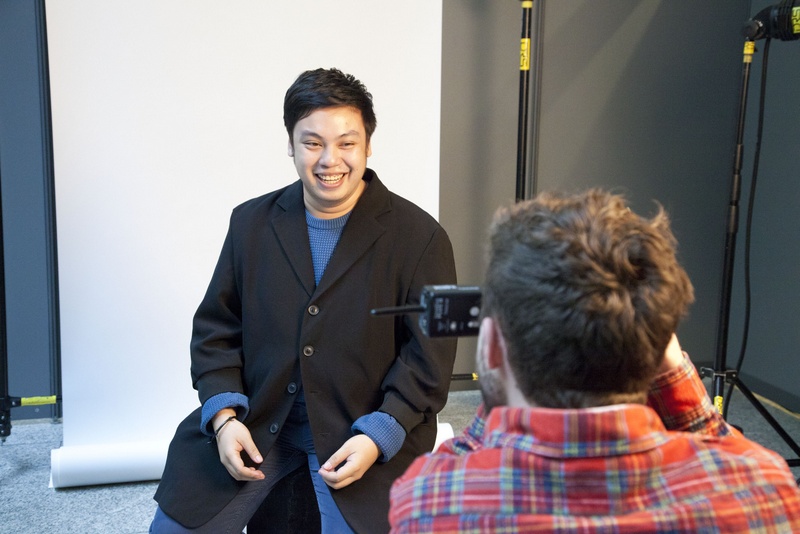
Filmmaker Dan Villegas was thankful for the opportunity to be part of this year’s Berlinale Talents. He said, “My biggest takeaway from Berlinale Talents is the value of learning. I learned a lot from the classes, and I’m thankful that there are entities that give grants for further education for filmmakers.“

When asked to describe the networking aspect of Berlinale Talents, Taiwan-based Filmmaker Rina Tsou quipped, “It is probably one of the best networking platform for us upcoming young filmmakers around the world! I have been really blessed to have built connections with my Filipino and Southeast Asian filmmaker friends this time. I have always dreamed of forming a co-production base in our region, and I look forward to future possibilities. “

1-filipinos Berlinale Talent Campus

To further promote Philippine cinema in new markets, the Film Development Council of the Philippines (FDCP) for the first time took part in the European Film Market, where film producers engaged leading European and worldwide distributors.  FDCP Chairman Briccio Santos along with Vice Chair Teodoro Granados led the Philippine delegation.  Producer/promoter Bianca Balbuena promoted Pepe Diokno’s “Above the Clouds”, Paul Soriano’s Manny Pacquiao biopic “Kid Kulafu” and Milo Sogueco’s “Mariquina.”
4-filipinos Berlinale Talent Campus-003
The European Film Market section of the Berlinale was attended by producers, distributors, film financiers, cinema operators, buyers and sellers as well as representatives of the TV, Home Entertainment/VoD, and New Media market. The market’s nine (9) day run showcased 400 exhibiting companies which accommodated a traffic of about 70,000 visits. The Philippine film previews did not have as many buyer-viewers as expected but this was seen as a challenge for next year’s Berlinale ; the FDCP, the independent producers and the Philippine Embassy will be cooperating more closely to invite more buyer-viewers for Philippine films in future Berlinale Filmfests.

To strengthen its networking with PHL participants,the Filcom and media, Ambassador Millie Sta. Maria-Thomeczek hosted a dinner on 6 February 2015, for the FDCP, Quezon City Vice Mayor Ma. Josefina G. Belmonte, organizers of the Quezon City Film Festival, Berlinale Talent campus participants, and journalists.

Berlinale takes place every year in Berlin and is regarded as one of the world’s leading film industry events.  The films that are successful in the competition are awarded Gold and Silver Bears by an international jury.  Up to 400 films are presented in various sections.  The 2015 Berlinale sold more than 300,000 tickets , had almost 20,000 professional visitors from 124 countries, including around 3,700 journalists, making the film festival with the largest audience worldwide. ***END


“25 YEARS AFTER THE BERLIN WALL’S FALL, A PIECE OF HISTORY BEGINS ITS JOURNEY TO MANILA”

November 28, 2014

Twenty five years after the fall of the Berlin Wall, a section of the famed symbol of a divided Europe will soon be making its way to Manila.  Mr. Mardomel Melicor, chargé d’affaires, a.i. of the Philippine Embassy, received the section (“Mauerteil”) at the Gärten der Welt (Gardens of the World).

Ms. Margit Gehrcken of the Berlin Senate Chancellery officially turned over to Mr. Melicor the deed of donation executed by the Berlin city government that presented a section of the Berlin Wall to the citizens of Manila.  The Berlin Senate conveyed that section of the Wall as part of its initiative to remember the importance of its fall.  The Berlin Senate further noted “it was happy that part of the Berlin Wall would stand in Manila as a monument to remember that it was possible to successfully overcome and reunify divisions in Berlin and Europe.

Mr. Melicor and Ms. Gehrcken observed that the section allocated to the Philippines was number 22 in a series of 40 sections that were formerly located at Potsdamer Platz.  Following the Wall’s fall, Sony GmbH donated portions of the Wall to the Berlin Senate. Potsdamer Platz is now a prime bustling commercial and entertainment district in Berlin, with Sony Center at its epicenter.

The piece of the Berlin Wall is expected to make its way to the Philippines in early 2015.  The section stands 3.65 meters tall and 1.2 meters wide.*END


PHILIPPINES AND GERMANY LAUNCH LANDMARK AGREEMENTS ON TECHNICAL AND VOCATIONAL EDUCATION AND TRAINING

October 8, 2014

Berlin, 8 October 2014.  As part of President Aquino’s official visit to Berlin, the Philippines and Germany signed two (2) agreements on technical and vocational education and training (TVET).  Witnessed by DFA Secretary del Rosario, DTI Secretary Gregory Domingo, TESDA Director General Joel Villanueva and high-ranking German officials, Philippine Ambassador to Germany Maria Cleofe R. Natividad and German Ambassador to the Philippines Thomas Ossowski signed the Joint Declaration of Intent that provides a comprehensive bilateral framework for cooperation on TVET.

As part of efforts to boost TESDA’s capabilities, Secretary Joel Villanueva and President Prof. Dr. Friedrich Hubert Esser of the Federal Institute for Vocational Education and Training (BIBB) also signed a Cooperation Agreement for collaborative research and development of TVET.  The Bonn-based BIBB is a German and international center of excellence for research on vocational education and training and the progressive development of VET.

While previous cooperation has been relatively ad hoc and delivered through stand alone projects, Ambassador Natividad stressed that “this framework agreement creates an institutional partnership between the Philippines and Germany, with both sides prioritizing TVET cooperation as part of our economic and development cooperation agenda.”  Under the institutional framework, both sides will jointly identify initiatives that will further integrate dual training in the Philippine educational system, deepen engagement with the private sector, enhance the attractiveness of TVET among the general public, and improve the TVET quality assurance framework.

Ambassador Natividad further stressed that “vocational training is the core of the ‘Made in Germany’ brand and has been indispensable in securing a supply of skilled workers that has given the German economy a competitive edge.  The Philippines is in the process of a major educational reform initiative, which will align our educational system with international standards. By working with Germany, we aim to have student trainees spend a significant portion of their time in the workplace accessing state of the art technology to hone their craft.  And by having the German-Philippine Chamber of Commerce and Industry (GPCCI) and German companies partner with local counterparts, I am confident that we will be able to strengthen our own educational system and produce a better qualified and more competitive workforce.”

This view was echoed by Secretary Villanueva when he emphasized that “each year, some 60 percent of German school-leavers choose to enter the dual system, ensuring that in Germany young people are integrated into the labor force with a degree of success almost unparalleled in Europe… The challenge we face in skills development is the need to increase permeability of TVET.  Since the issues in TVET are now global in nature, the more we should consider external support in the design of our training programs.”  According to Secretary Villanueva, outputs from monitoring and research would not only address current labor market needs, but would also allow TESDA to identify future trends in program development and adoption of new technologies.

Under this framework, the Philippines and Germany have just launched the “Dual Training as Extension of the Education Reform Initiative K to 12 of the Philippines (K-12 Plus)” program, which will pursue innovative dual training approaches in Metro Manila and the Central Visayas for the tourism, construction, manufacturing, electronics and microfinance sectors.  Within these pilot arrangements, German and Philippine companies will work with Chambers of Commerce and schools to develop education and training curricula that are relevant to today’s business realities.  Secretary Villanueva emphasized that “we hope to beef up our dual training system and make it a sustainable program, especially for the youth. We will attain this by strengthening our advocacy and encourage more TVET institutions and companies to adopt this system” to address youth unemployment and underemployment.

The multi-stakeholder K-12 Plus initiative, includes the support of the Department of Education, TESDA, German-Philippine Chamber of Commerce and Industry (GPCCI), Philippine Chamber of Commerce and Industry (PCCI), Cebu Chamber of Commerce, Philippine Business for Education (PBEd) Foundation, AFOS Foundation for Entrepreneurial Development, German International Cooperation (GIZ), German Savings Bank Foundation for International Cooperation (SBFIC), DEG (KfW), Sequa, and the German Confederation of Skilled Crafts.  *END

PHILIPPINES LAUNCHES EXHIBIT TO COMMEMORATE 60 YEARS OF PHILIPPINE-GERMAN DIPLOMATIC RELATIONS

June 26, 2014

Berlin, 26 June 2014. Earlier this month, the Philippines launched an exhibit to commemorate the 60th anniversary of diplomatic relations between the Philippines and Germany.  The audio-visual exhibit, designed by Mr. Dakila Gonzales from the Philippine Tourism Office in Frankfurt, charted the shared history between Philippines and Germany, which actually originated during Ferdinand Magellan’s “discovery” of the Philippines in 1521.  Magellan’s company not only included German sailors but the expedition was itself financed by Jakob Fugger, a well-known banker from Augsburg.

As the Spanish colonial period took hold, German trading companies began operating in the Philippines in the 1830s and Germans would soon dominate the pharmaceutical industry through such enterprises as Botica Boie and Botica Zobel.  Burgeoning commercial links spurred the German trading states of Bremen and Hamburg to establish consulates in the country.  This strong German presence, which was the second largest expatriate community after the British, led to the creation of the German Reading Club (the forerunner of the current German Club) in 1880.  However, people-to-people interactions were not solely one way.  Dr. Jose Rizal pursued his ophthalmology training at the Charite Hospital in Berlin and he spent considerable time as well in Heidelberg, Wilhemsfeld, Dresden and Leipzig.  Rizal completed Noli Mi Tangere in 1886 and through his benefactor, Maximo Viola, had the first batch of 2,000 copies of his masterpiece published at the Berliner Buchdruckerei-Aktiengesellschaft.

The post-War period would witness the resurgence of Philippine-German relations, initially through the appointment of Dr. Policronio R. de Venecia as Consul General to Hamburg in 1954.  The next year, the Philippines and Germany signed a trade protocol, with President Carlos P. Garcia announcing during his State of the Nation Address that the “trade protocol with Germany includes provisions for the training of Filipino scholars and technicians in German industrial and educational institutions.” At the time, the two way trade volume was estimated at USD 50 million.  Sixty years on, total trade in 2013 reached approximately USD 5.4 billion and the Philippines and Germany are pursuing an ambitious technical and vocational education and training (TVET) program under the new K-12 school system.

Several important official visits have been organized in the post-war period, including the German President and Mrs. Heinrich Lübke’s State Visit in 1963, President Corazon Aquino’s State Visit to Germany in 1989, and reciprocal visits of President Fidel Ramos in 1994 and German Chancellor Helmut Kohl in 1996.  Recent years have witnessed a resurgence in high-level interactions, with the visits of Vice President Jejomar Binay to Germany and Foreign Minister Guido Westerwelle and Labor Minister Ursula von der Leyen to the Philippines in 2013.

Ambassador Maria Cleofe R. Natividad observed that people-to-people links continue to be a main driver of the Philippine-German partnership.  In the late 1960s, Filipino workers, mostly nurses, began to immigrate to Germany.  Decades later, a new cycle of Filipino nurses are beginning to arrive in Germany through the innovative Triple Win program, which seeks to bridge the undersupply of German healthcare professionals with the glut of qualified Filipino nurses.  On the cultural front, the Konrad Adenauer Stiftung is itself celebrating 50 years in the Philippines this year, with Manila being its first office in Asia.  The German Football Federation (DFB) is supporting the development of the grass roots football program in the country while a young set of Filipino-Germans, led by Roland Müller, Stephan Schrock, and Patrick Reichelt, have reinforced the Philippine Azkals national football team.

After the audio-visual exhibit, the Embassy together with the University of the Philippines Alumni Association (UPAA) also launched the 91-page “Orientation Booklet for Filipinos in Germany.”  The UPAA donated the first batch of the orientation booklets to the Embassy so that newly arrived Filipinos would have practical tips and information in adapting to life in Germany.  An online version of the booklet is available here: http://projects.upaagermany.org/projects-germany-orient-2014.html.  *END

« Previous Page
Next Page »

Archives

CONNECT WITH US

  • 
  • 
  • 
  • 

CONTACT US

Luisenstrasse 16, 10117 Berlin
Phone: +49 (0) 30 864 95 00
info@philippine-embassy.de
(General Inquiries only)
For Consular-related Queries please send directly to the respective email addresses below
)

Assistance to Nationals (ATN) / Emergency Hotline: +49 (0) 173 421 7750
(Please help us keep the line free for those with real emergencies. Do not call this number for regular inquiries.)

Consular Hotline: +49 (0) 173 521 5703 (For queries on Consular Services)

Email Addresses:

Passport
(passport@philippine-embassy.de);

Authentication, Notarial, and Legalization
(authentication@philippine-embassy.de);

Visa
(visa@philippine-embassy.de);

Civil Registry
(civilregistry@philippine-embassy.de);

Citizenship
(Renunciation; Re-acquisition/Retention) (citizenship@philippine-embassy.de);

Other Consular queries
(consular@philippine-embassy.de)

Opening Hours
Consular Section
Mon – Fri – Fri 09:00H – 16:00H
(Except on Philippine and German holidays)


Philippine Migrant Workers Office (MWO)

For OEC and Verification of Employment Contracts of Balik-Manggagawa in Germany, Belgium, Luxembourg, The Netherlands, and Russia:

Mobile: +49 17681317465 (WhatsApp);
email: mwo.germanyoec@gmail.com

For accreditation of Agency and Direct Hires in Germany, Belgium, Luxembourg, The Netherlands, and Russia:

Mobile: +49 15229021623 (WhatsApp/Viber)
email: germany@mwoberlin.com

For OWWA membership, welfare, and labor case assistance:

Mobile: +49 152 2823 8085 (WhatsApp)
email: owwamemb@gmail.com; mwo_berlin@dmw.gov.ph

Recent Stories

  • Implementation of the Philippine e-visa system in the Federal Republic oF Germany
  • RERB Hearing
  • AMBASSADOR ALMOJUELA MEETS PRESIDENT OF THE LAW OF THE SEA TRIBUNAL
  • PHILIPPINE EMBASSY IN BERLIN COMMEMORATES DAY OF THE SEAFARER 2026 WITH BACK-TO-BACK EVENTS IN BREMERHAVEN
  • DIALOGUE IN BERLIN UNDERSCORES GROWING MOMENTUM TOWARDS THE CONCLUSION OF THE PHILIPPINES-EU FREE TRADE AGREEMENT
Copyright © 2026