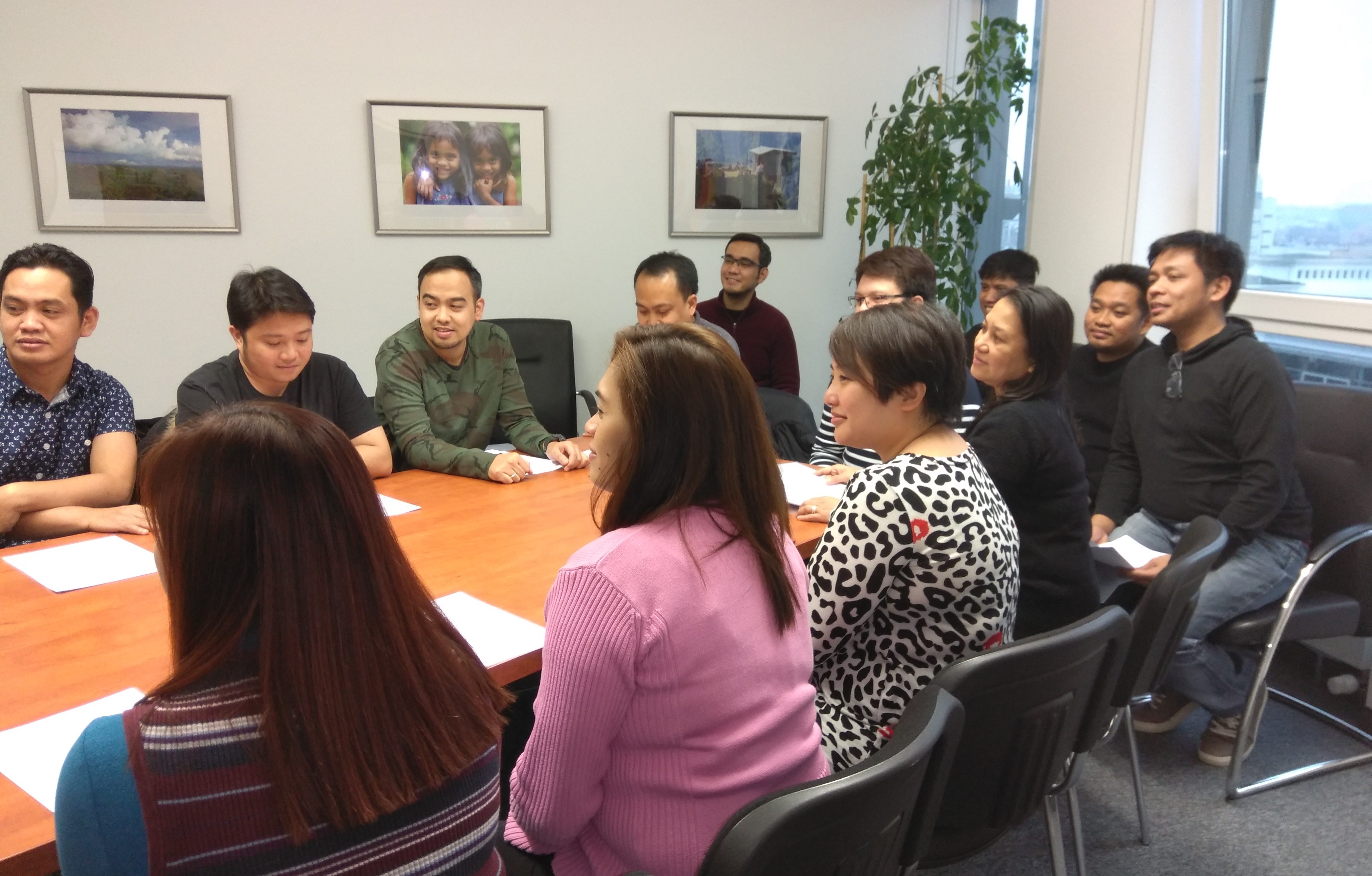
“Walk tall, women—the world is your stage.” This was the refrain of the fashion and musical show The Philippines: A Tropical Tapestry organized by the Philippine Embassy in Berlin and the Department of Tourism on 10 March at the Arndt Art Agency, to shine the spotlight on Philippine culture and tourism, as well as to celebrate National Women’s Month. More than 75 guests, including foreign ambassadors and diplomats, and business and cultural contacts, attended the event, aside from the members of the Embassy and its attached agencies, led by Chargé d’Affaires Lillibeth Pono.

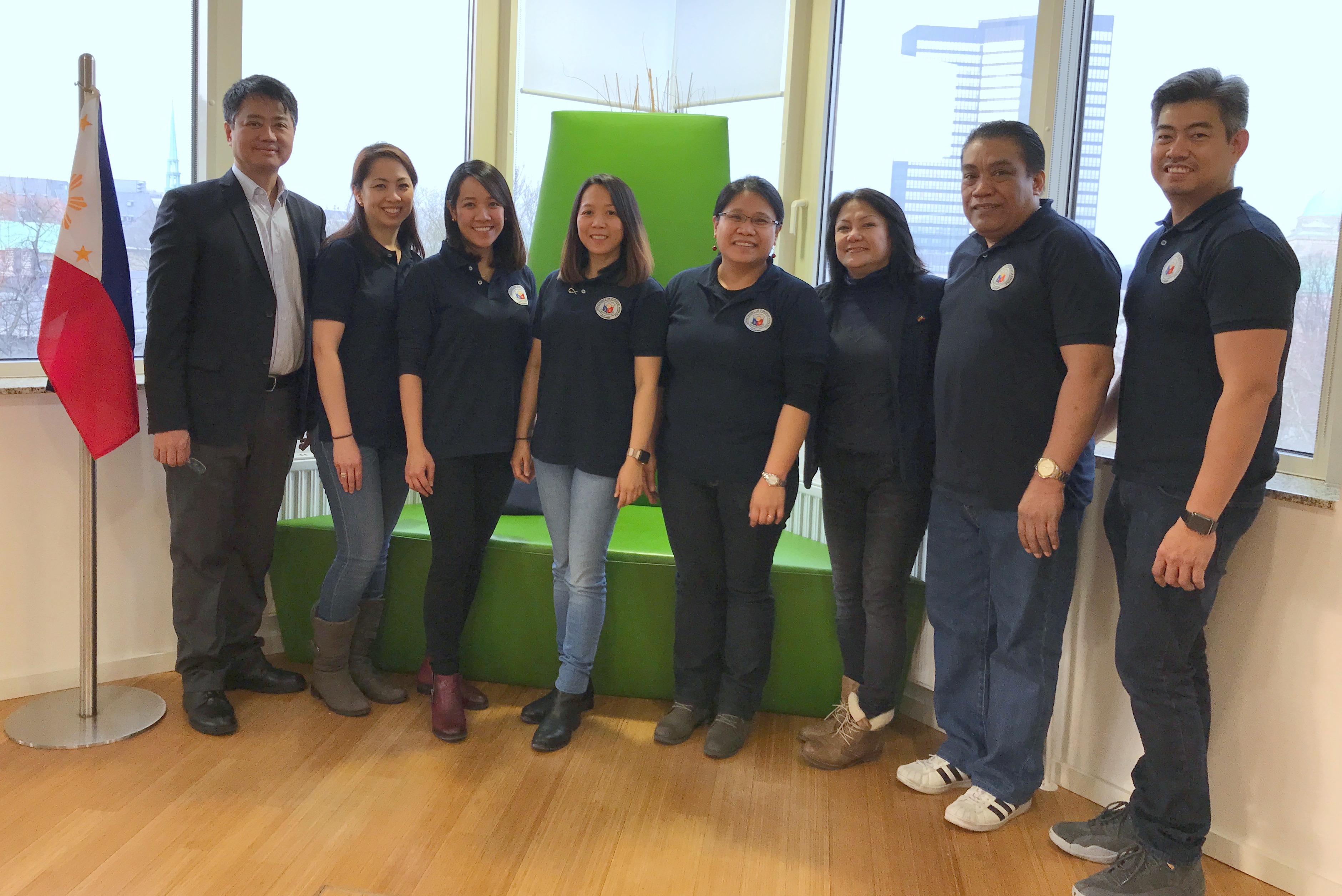
CDA Lillibeth Pono with the DOT team led by TPB Deputy COO Maricon Ebron and Tourism Director Meggie Valdes with models clad in Renee Salud creations.
Top Filipino models took to the catwalk wearing the creations of leading Filipino designer Renee Salud, while the Ryan Cayabyab Singers (RCS) serenaded the audience with their renditions of Filipino classics and original Pilipino music (OPM). Managing the show were production director Concon Siñel and stage director Raymond Villanueva.
“Many of you would have seen our barong and terno made of jusi or pineapple silk, but few among you would be familiar with the weaves of our indigenous peoples, such as the Igorot in our northern highlands or our Tboli, or dreamweavers, from the south,” Ms. Maricon Ebron, Deputy COO of the Philippine Tourism Promotions Board (TPB), said in her opening remarks.
The fashion show included segments on Luzon, Visayas, and Mindanao, with videos of top attractions in these major island groups playing in the background as the models walked down the runway.
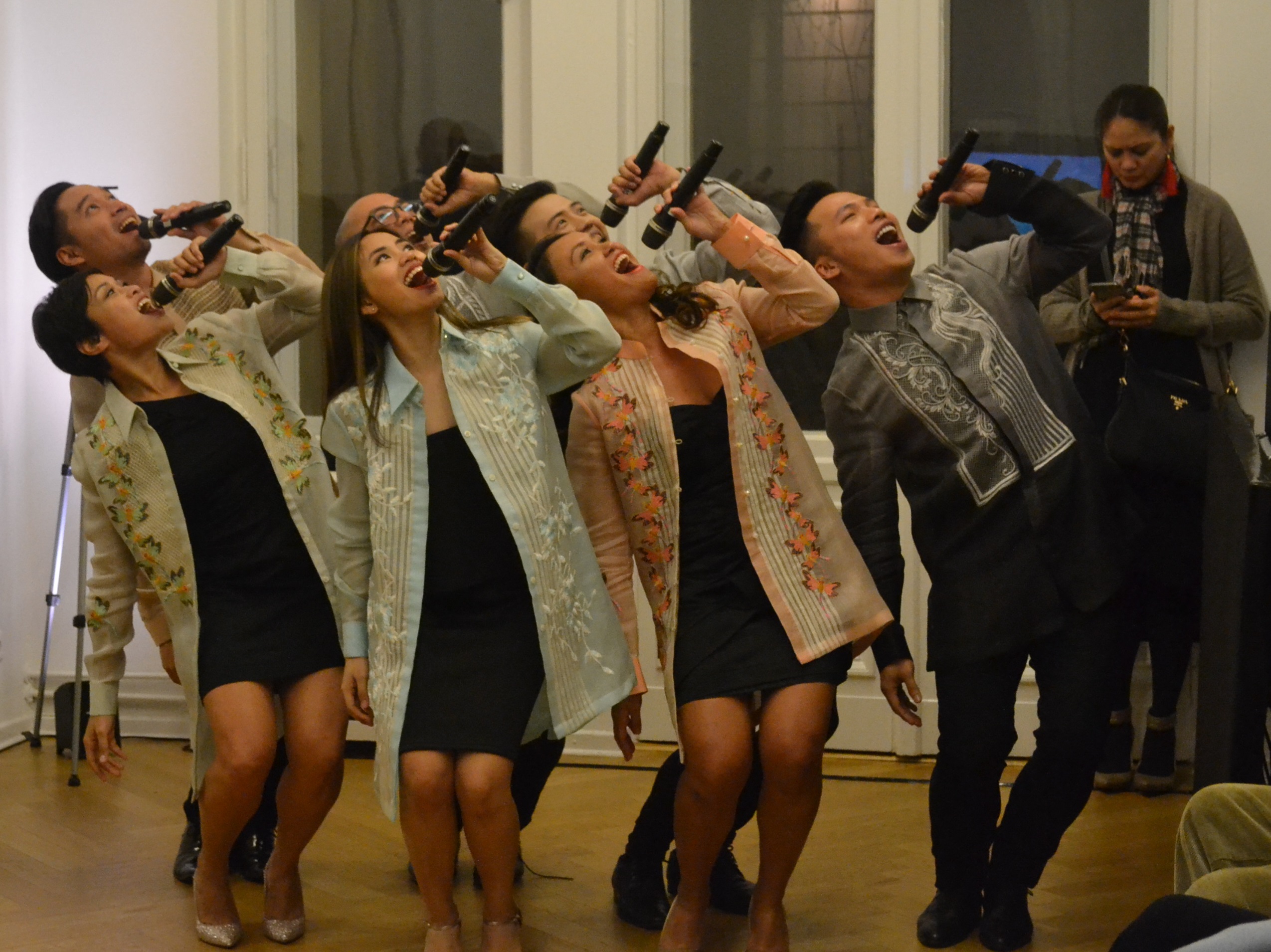
The Ryan Cayabyab Singers—Kaye, Nica, Celine, Erwin, V.J., Anthony, and Poppert—entertain the audience with renditions of Filipino favorites.
As a tribute to the women in the audience, the RCS performed a playful suite of Sylvia Latorre classics, including “Waray-waray,” “Galawgaw,” and “No Money, No Honey.” In their spiel between the songs, they highlighted the strength of Filipino women and the need to continue working for gender equality in spite of the gains that have been made.
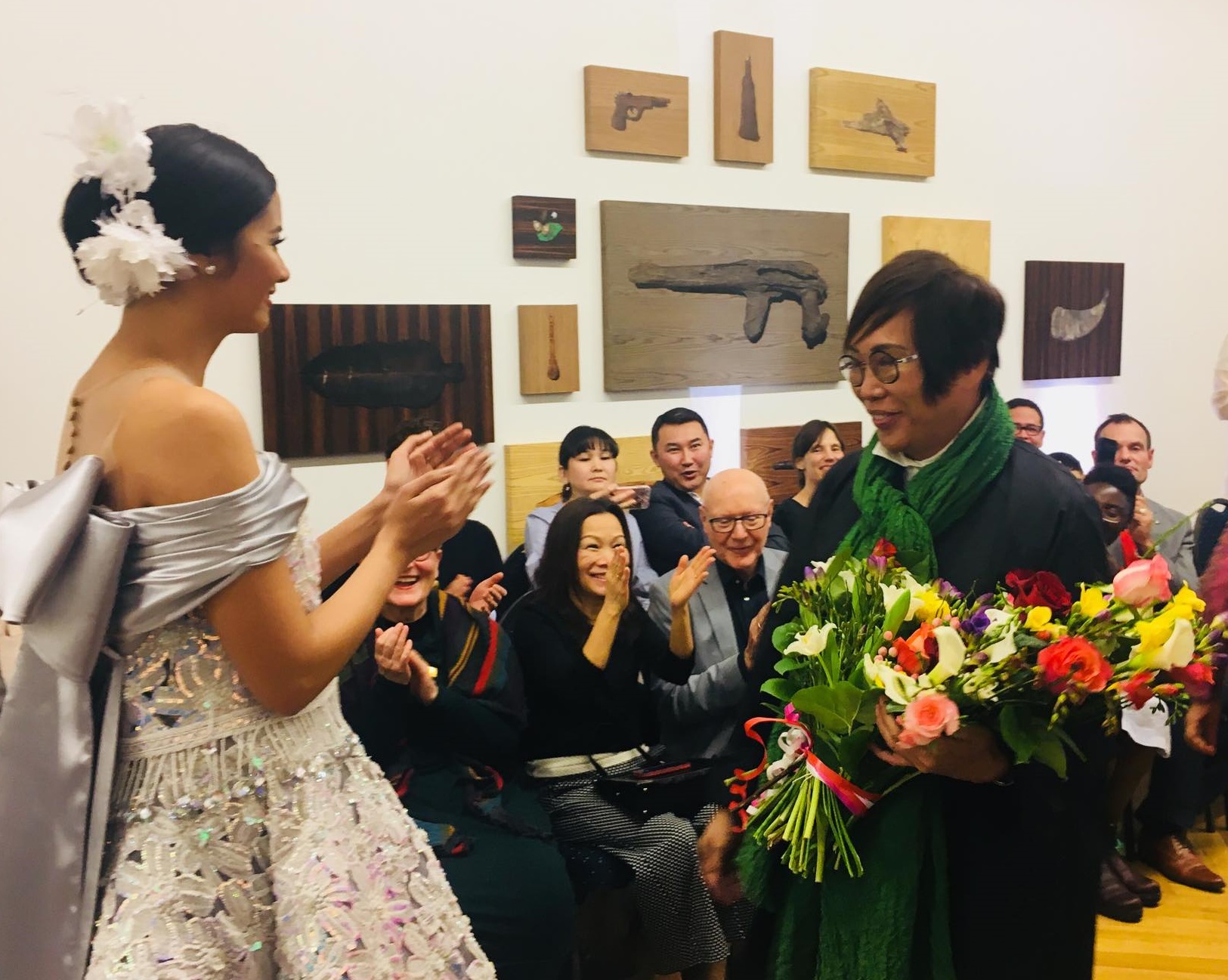
Designer Renee Salud draws resounding applause from the multicultural audience. Also seen in the background are the artworks of Nona Garcia.
The show was followed by a cocktail reception, where the guests had the opportunity to sample traditional Filipino delicacies such as puto, empanada, adobo paté, and chicken and pork barbecue, while enjoying the artworks of Filipino artist Nona Garcia on the gallery walls. Mango juice was also served, together with Don Papa rum from the Philippine Trade and Investment Center in Berlin.
“What better way to mark Women’s Month than through a celebration of our culture,” Ms. Pono said. “Like the artisans who wove the fabrics in those dresses and the artist who painted the works on these walls, women have long played a vital role in keeping our arts and culture alive.”
The guests were sent off with capiz-shell frames from the Philippines as souvenirs, as well as long-stemmed roses for the women. END